Plein Watt Moto / Practical guides
79Bike Falcon Pro range: battery math, charging and a realistic ride plan
Checked
Use the Falcon Pro’s 72 V 35 Ah battery to build a cautious range plan. See theoretical scenarios, charging questions and a practical route log.
How far will a 79Bike Falcon Pro travel on one charge? There is no single reliable answer for every rider. A slow ride on firm terrain and a faster ride with repeated climbs ask very different things of the same battery. The useful approach is to understand the nominal energy, choose conservative assumptions and improve the estimate with observations from your own riding.
Understand what 72 V and 35 Ah tell you
The manufacturer lists a 72 V 35 Ah battery. Multiplying voltage by capacity gives 2,520 Wh, or 2.52 kWh, of nominal energy. This is a specification-based calculation. It does not establish how much energy the motorcycle makes available to the rider, or how much electricity a charger draws from a wall outlet.
Usable energy can be lower than the nominal figure. Battery controls, temperature, battery condition and operating limits affect the amount available. Charging losses mean electricity purchased at the outlet is also different from energy stored in the battery. Keep these quantities separate when comparing range and running costs.
Use scenarios to understand sensitivity
Consider a deliberately simplified planning exercise that allocates 80% of nominal capacity to the ride. That leaves a theoretical 2,016 Wh. The 80% figure is an assumption for this example, not a measured Falcon Pro usable-capacity figure or a guaranteed reserve.
At an assumed consumption of 30 Wh per kilometer, the calculation produces 67.2 km, approximately 41.8 miles. At 50 Wh per kilometer it produces 40.3 km, approximately 25.1 miles. At 70 Wh per kilometer it produces 28.8 km, approximately 17.9 miles. These consumption assumptions are illustrative; they are not verified Falcon Pro test results.
The lesson is the size of the variation. Changing the consumption assumption changes the answer substantially even though the battery stays the same. Do not choose the longest scenario as your expected range. Actual usable capacity may be lower, and an unfamiliar route needs additional margin.
Build a route that leaves options
For the first rides, choose a permitted route with short loops and an easy return to your starting point. Record distance, elevation changes, surfaces, temperature, riding mode and the battery indication at the beginning and end. Note anything unusual, such as soft ground or sustained high speed.
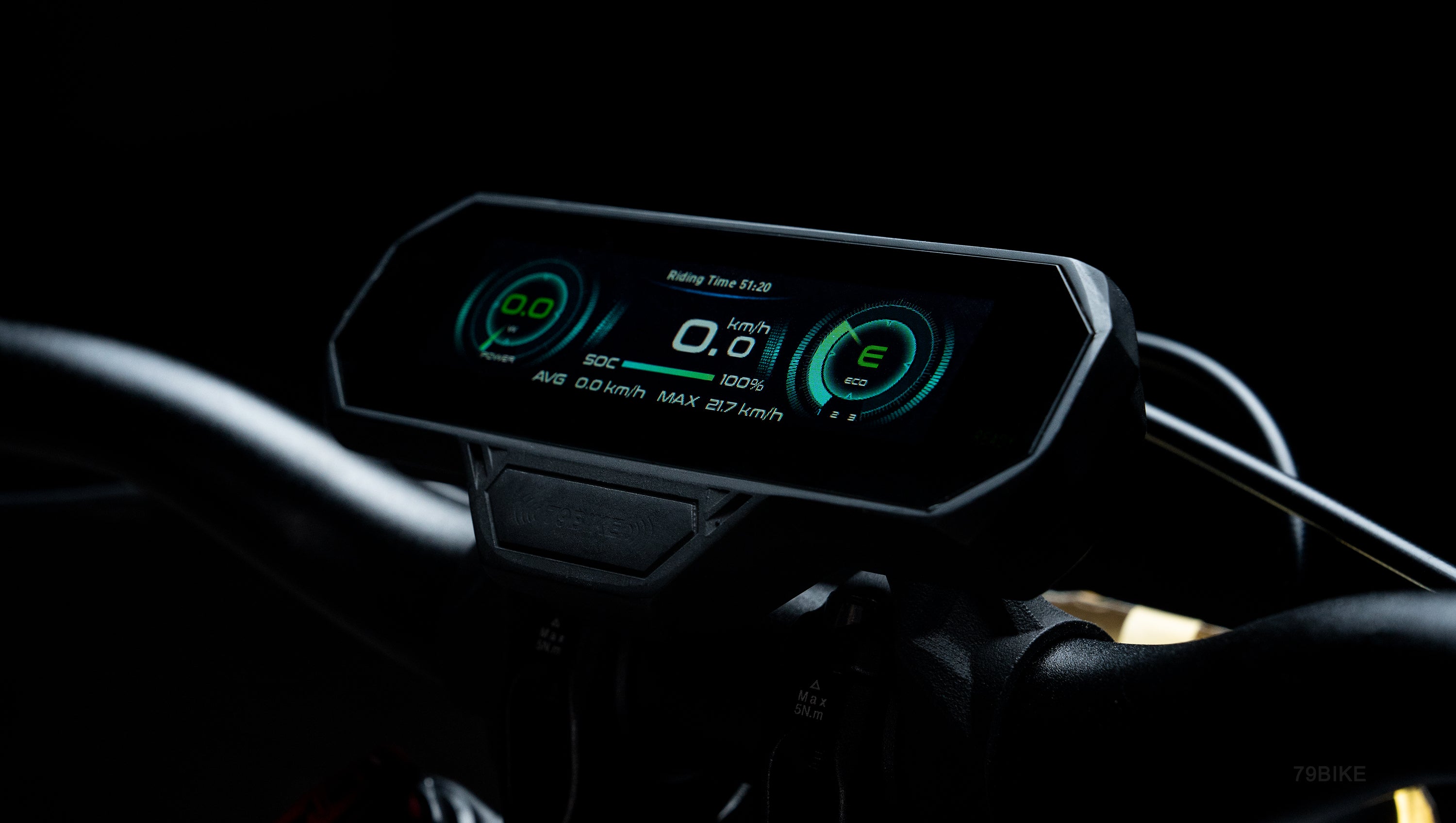
A battery percentage display is not a laboratory energy meter, so avoid treating one short ride as an exact consumption test. Look for a repeatable pattern over several comparable outings. Increase route length gradually and keep an exit option when the terrain or weather differs from your previous observations.
Confirm the charging setup before delivery
Ask NYVOLT which charger is included with the exact motorcycle and request its input rating, connector details and charging instructions. A US buyer should confirm outlet compatibility rather than assuming that every supplied charger accepts the same voltage or plug. Follow the battery and charger instructions supplied with the vehicle.
Ask how charging time is specified: starting state of charge, temperature and charger output all affect the result. A published full-charge time cannot tell you precisely how much useful energy will be added during a brief stop. Plan a riding day around confirmed charging access, not an optimistic midpoint estimate.
Turn observations into a purchase question
If you have not bought the motorcycle yet, send NYVOLT a realistic route description and ask for evidence relevant to that use. If you already own it, use your log to identify the conditions that reduce your return margin. A measured personal routine is more valuable than treating any advertised maximum distance as a promise for every ride.
Calculation scenarios — not a range test
| Assumed consumption | Theoretical distance |
|---|---|
| 30 Wh/km | 67.2 km / 41.8 mi |
| 50 Wh/km | 40.3 km / 25.1 mi |
| 70 Wh/km | 28.8 km / 17.9 mi |
Apply this guide to your purchase
- Read NYVOLT’s range and charging guide ↗
- Ask NYVOLT to confirm a configuration and delivery quotation ↗
Commercial resources from NYVOLT, this magazine’s publisher. Confirm prices, availability and delivery for your order.
Sources and method
Documentary guide prepared October 14, 2026 from the listed sources. Calculations are explicitly theoretical; no riding test by this publication is claimed. Confirm the exact version and order terms with the seller.